How to Read a Male Vitality Supplement Label: Proprietary Blends, Blend Maths and the Doses That Vanish
Quick Answer: What Does a Proprietary Blend Actually Hide?
It hides the only number that matters — how much of each ingredient you are getting — and you can often prove underdosing with nothing more than the blend total divided by the ingredient count. US labelling rules under 21 CFR 101.36 require the total weight of a proprietary blend to be declared, but not the weight of each ingredient inside it. Divide the total by the number of ingredients named and you have the absolute ceiling for the smallest one. If that ceiling sits below the dose used in the published trials, the arithmetic has already answered the question.
- The free information: ingredients inside a blend must be listed in descending order by weight, so last-named is smallest.
- The ceiling test: blend total ÷ ingredient count = the most the smallest-listed ingredient can possibly be.
- The benchmark: Tongkat Ali 100–400 mg, Tribulus 400–750 mg, saw palmetto 320 mg — the doses trials actually used.
The one rule that hands you free information
Most articles about proprietary blends tell you that blends hide amounts and then stop. What matters is the part of the regulation that does work in your favour.
Under 21 CFR 101.36, the US rule governing Supplement Facts panels, two things are mandatory. First, the quantitative amount by weight declared for a proprietary blend must be the total weight of all the dietary ingredients in it, printed on the same line as the blend name. Second, the ingredients inside that blend must be declared in descending order of predominance by weight, indented underneath the blend name.
The second rule is the whole game. The manufacturer does not have to tell you the amounts, but it does have to tell you the ranking: first-named is heaviest, last-named is lightest. That is a legally binding statement about your product, printed on the box, and almost nobody uses it. If you are buying a formula specifically for its Tongkat Ali and Tongkat Ali is listed third of three, you already know it is the smallest component of that blend before you do any arithmetic at all.
Blend maths: the arithmetic that ends the argument
Here is the calculation nobody in this category publishes. Take the blend total. Divide it by the number of ingredients named inside the blend. That figure is the maximum the smallest-listed ingredient can be, because a perfectly even split is the best possible case and any uneven split makes the smallest one smaller.
Then compare that ceiling against the dose the trials actually used. If the ceiling is already lower, you are done. No further information is required and no marketing copy can rescue it.
Table A — Blend maths, worked
| Blend total | Ingredients named | Max possible for smallest-listed | Studied dose to clear | Verdict |
|---|---|---|---|---|
| 870 mg | 3 botanicals | 290 mg | Tongkat Ali 100–400 mg/day | Arithmetically possible — an even split clears the trial range, but the panel does not state the split |
| 870 mg | 3 botanicals | 290 mg | Saw palmetto 320 mg/day | Impossible if listed last. 320 mg is more than a third of 870 mg, so saw palmetto at its studied dose would have to be the largest component |
| 1,200 mg | 6 ingredients | 200 mg | Tribulus 400–750 mg/day | Impossible for the smallest-listed — the ceiling is half the low end of the studied range |
| 1,500 mg | 10 ingredients | 150 mg | Saw palmetto 320 mg/day | Impossible for the smallest-listed, and impossible for most of the others too |
| 500 mg | 8 ingredients | 62.5 mg | Tongkat Ali 100–400 mg/day | Impossible for the smallest-listed — below even the lowest trialled dose |
The 870 mg row shows how the test cuts both ways. Three botanicals in 870 mg is a comparatively tight blend, and an even three-way split of 290 mg each would comfortably clear the Tongkat Ali trial range. But an even split is an assumption, not a disclosure. Because the ordering rule guarantees the third-listed botanical is the lightest, the honest reading is that one of those three is above 290 mg and one is below it, and the panel does not tell you by how much.
A blend total is not a dose. A three-botanical 870 mg blend is 870 mg of blend, not 870 mg of any one botanical. Marketing copy that quotes the blend total next to a study that used a single ingredient is comparing two different things, and it is the single most common way a label creates an impression the arithmetic will not support.
What the trials actually dosed
The ceiling test only works if you know what you are measuring against. These are the doses used in the published human research for the three botanicals men most often meet on a male-vitality label. Every figure below comes from a primary source, not a supplement blog. For the Tongkat Ali row specifically, our study-by-study breakdown of what the trials actually dosed goes through each trial in turn.
Table B — Studied dose lookup
| Ingredient | Dose used in trials | Standardisation that mattered | Source |
|---|---|---|---|
| Tongkat Ali (Eurycoma longifolia) | 100–400 mg/day; 200 mg the most frequently trialled | Standardised aqueous root extract. The clinical Physta extract is specified at 0.8–1.5% eurycomanone, with defined protein, polysaccharide and glycosaponin fractions | Leisegang K et al., Medicina 2022;58(8):1047; Talbott SM et al., J Int Soc Sports Nutr 2013;10:28; Chinnappan SM et al., Food & Nutrition Research 2021;65:5647 |
| Tribulus terrestris | 400–750 mg/day for one to three months | No single clinical standard. Steroidal saponin content varies widely between preparations and is rarely stated | Vilar Neto JO et al., Nutrients 2025;17(7):1275 — 10 studies, 483 participants |
| Saw palmetto | 320 mg/day as the standard dose; escalated to 640 mg and then 960 mg in the CAMUS trial | Lipidosterolic fruit extract. The dose escalation ran 320 mg to week 24, 640 mg to week 48, 960 mg to week 72 | Barry MJ et al., JAMA 2011;306(12):1344–51 — 369 men aged 45 and over |
Two of those rows carry an important caveat that the dose figure alone does not convey. For Tribulus, the systematic review that produced the 400–750 mg range concluded that no robust evidence was found for increasing testosterone levels — eight of its ten studies reported no significant androgen change. Hitting the studied dose of an ingredient whose studies were negative buys you nothing. And for saw palmetto, the CAMUS trial found no advantage over placebo on its primary outcome even at three times the usual dose, so 320 mg is a benchmark for comparability, not a promise.
That distinction — dose adequacy versus evidence quality — is why we treat these as two separate checks. Our evidence review of Tongkat Ali, Tribulus and saw palmetto covers the second one in detail.
Check the panel before you check out
If you are comparing male-vitality formulas, read the Supplement Facts panel on the official store and run the blend-total arithmetic yourself before you decide.
Order From Official StoreLabel red flags, and the seals that actually mean something
Once you can do the arithmetic, most of the remaining tricks become easy to spot. These are the ones worth knowing.
Red flags on a Supplement Facts panel
- Your headline ingredient is listed last. The descending-weight rule makes this a disclosure, not a guess. The ingredient on the front of the box is the smallest thing in the blend.
- A long ingredient list inside a small total. Twelve botanicals in 750 mg is a flavour of each, not a dose of any. The ceiling test makes this obvious in one division.
- An extract ratio quoted instead of a percentage. Claims like 100:1 or 200:1 describe how much raw plant the manufacturer says went in, not how much active compound came out. They are not verifiable by the buyer and a higher ratio does not mean a stronger extract.
- A named bioactive with no percentage attached. "Standardised extract" without a number is a marketing phrase. Standardised to what, and how much?
- The blend total quoted as though it were a single-ingredient dose. Watch for copy that puts an 870 mg blend total in the same sentence as a study that dosed one botanical.
- Percent Daily Value marked with a dagger. That symbol simply means no Daily Value has been established. It is normal for botanicals and tells you nothing either way.
Third-party certification is the one genuine quality signal available to a consumer, and it is also routinely oversold. USP Verified, NSF Certified for Sport and Informed Sport all test finished products for identity, contamination and, in the sport programmes, banned substances. That is real and it is worth paying for.
But note two things. First, none of those programmes certifies that a dose is clinically meaningful. They confirm that what is on the label is in the bottle, which is a different and lower bar than confirming the label describes a useful amount. Second, the logo itself is not the proof. The US Anti-Doping Agency's guidance on NSF Certified for Sport is explicit that you should confirm the lot number on the bottle in front of you matches the lot listed in the certifier's own database. Artwork can be printed by anyone. A lot entry cannot.
Applying this to Primordial Vigor X
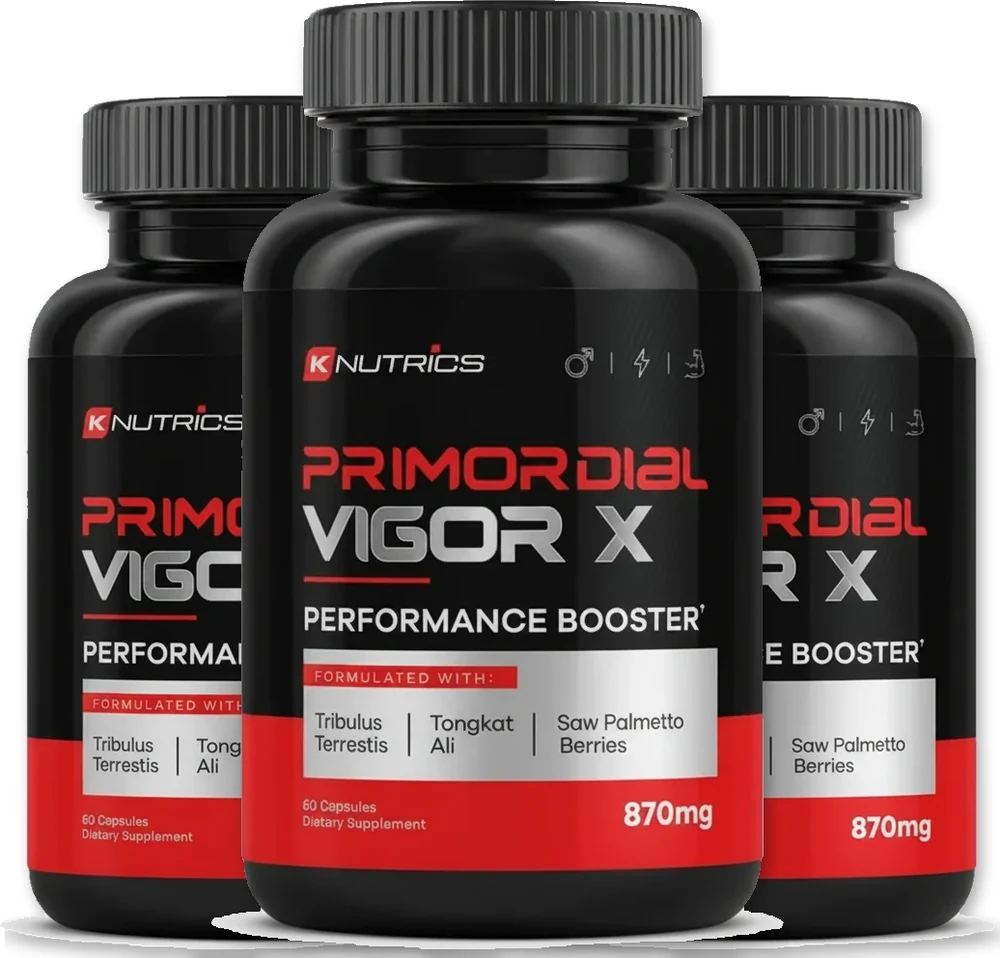
We publish this site as an affiliate, so it would be easy to write a label guide that quietly exempts our own product. Primordial Vigor X publishes an 870 mg once-daily total and names three botanicals: Tribulus terrestris, Tongkat Ali (Eurycoma longifolia) root and saw palmetto berry. What we have not been able to verify anywhere is a published per-ingredient milligram breakdown, or a standardisation figure for any of the three. The homepage says as much. That means the same limitation described in Table A applies here: the blend total is disclosed, the split is not, and no reader can map 870 mg onto any row of Table B.
The practical instruction is therefore the same one we would give for any competing formula. Before you buy, open the Supplement Facts panel on the official store and look for exactly three lines: the blend total, the order the three botanicals are listed in, and whether any standardisation percentage is printed next to the Tongkat Ali entry. Those three lines tell you more than the entire front of the box. If a standardisation figure is present, our guide to what eurycomanone percentages and extract ratios actually mean explains how to read it.
What this method does not show
Blend arithmetic is a screening tool with real limits, and it is worth being clear about them.
It can prove an ingredient is below a studied dose. It can never prove one is at a studied dose, because the ceiling test only ever produces an upper bound. A blend that passes has not been shown to be adequately dosed; it has only failed to be shown inadequate.
It says nothing about extract quality: two products can declare the same milligrams of the same botanical and contain very different amounts of the compound the trials were measuring. It says nothing about whether the ingredient works — a correctly dosed ingredient with negative trial evidence is still negative, which is the situation Tribulus is in. And it says nothing about the finished product, because a multi-ingredient supplement has almost never been trialled as sold. Evidence attaches to the ingredients, at their doses, in their standardisations — not to the bottle.
Finally, the scale of the gap between claim and evidence in this category is documented. A 2020 analysis in the World Journal of Men's Health examined 50 top-selling testosterone-boosting supplements containing 109 distinct compounds. Ninety per cent of the products claimed to boost testosterone. Only 24.8% of the compounds had data supporting that claim, 18.3% had data showing no change, and 10.1% contained components with data suggesting a negative effect. Reading the panel properly is not pedantry. It is the only defence available.
Medical note: this article is general information about product labelling, not medical advice. These statements have not been evaluated by the Food and Drug Administration. Dietary supplements are not intended to diagnose, treat, cure or prevent any disease. Speak to a healthcare professional before starting any supplement, especially if you take medication or are managing a prostate or hormonal condition — saw palmetto in particular can interact with blood thinners. Individual results vary. This product is for adult men only.
Frequently asked questions
Is a proprietary blend always a bad sign?
Not automatically, but it always costs you information. US labelling rules let a manufacturer declare one total weight for the whole blend instead of a weight for each ingredient, so you cannot check any single ingredient against the dose used in a trial. Some blends are perfectly adequate. The point is that the label gives you no way to tell, and that uncertainty is the manufacturer's choice rather than a legal requirement.
How do I work out if an ingredient is underdosed?
Divide the blend total by the number of ingredients named inside it. That result is the absolute maximum the smallest-listed ingredient can be, because an even split is the best possible case. If that ceiling is already below the dose used in the published trials, the ingredient is underdosed and no further information is needed. An 870 mg blend of three botanicals caps every ingredient at 290 mg. A 1,500 mg blend of ten ingredients caps the smallest at 150 mg.
What does the order of ingredients in a blend tell me?
It is the only quantitative information a proprietary blend gives you. Under 21 CFR 101.36, dietary ingredients inside a proprietary blend must be declared in descending order of predominance by weight. The first-named ingredient weighs the most and the last-named weighs the least. So if the botanical you are buying the product for is listed last, it is by law the smallest component of that blend.
Do third-party certification logos prove a supplement is accurately dosed?
No. Certification programmes such as USP Verified, NSF Certified for Sport and Informed Sport test for identity, contamination and banned substances. They are not a verdict on whether a dose is clinically meaningful. A printed logo is also not proof of anything on its own. The US Anti-Doping Agency advises checking the product's lot number against the certifier's own database, because the database is the record and the artwork is not.
Does Primordial Vigor X publish its per-ingredient amounts?
It publishes an 870 mg once-daily total and names three botanicals: Tribulus terrestris, Tongkat Ali and saw palmetto berry. We have not been able to verify a published per-ingredient milligram breakdown or a standardisation figure for any of the three, so we do not state one. Check the Supplement Facts panel on the official store before buying and apply the same arithmetic to it that you would apply to any other label.
Scientific references
- eCFR — 21 CFR 101.36, Nutrition labeling of dietary supplements (proprietary blend total weight and descending order of predominance by weight)
- Clemesha C.G., Thaker H., Samplaski M.K. — "Testosterone Boosting" Supplements Composition and Claims Are not Supported by the Academic Literature. World J Mens Health 2020;38(1):115–122. PMID 31385468
- Leisegang K., Finelli R., Sikka S.C., Panner Selvam M.K. — Eurycoma longifolia (Jack) Improves Serum Total Testosterone in Men: A Systematic Review and Meta-Analysis of Clinical Trials. Medicina 2022;58(8):1047. PMID 36013514
- Talbott S.M., Talbott J.A., George A., Pugh M. — Effect of Tongkat Ali on stress hormones and psychological mood state in moderately stressed subjects. J Int Soc Sports Nutr 2013;10:28. PMID 23705671
- Chinnappan S.M. et al. — Effect of Eurycoma longifolia standardised aqueous root extract (Physta) on testosterone levels and quality of life in ageing male subjects. Food & Nutrition Research 2021;65:5647. PMC8254464
- Vilar Neto J.O. et al. — Effects of Tribulus terrestris L. Supplementation on Erectile Dysfunction and Testosterone Levels in Men: A Systematic Review of Clinical Trials. Nutrients 2025;17(7):1275. PMID 40219032
- Barry M.J. et al. — Effect of increasing doses of saw palmetto extract on lower urinary tract symptoms: a randomized trial (CAMUS). JAMA 2011;306(12):1344–51. PMID 21954478
- U.S. Anti-Doping Agency — Third-Party Testing Guidance (verify the lot number against the certifier's database)
See the label for yourself
Three named botanicals, an 870 mg daily total and a 60-day money-back guarantee. Read the Supplement Facts panel on the official store and apply the checks above.
Order Primordial Vigor X Now