Do Testosterone Boosters Work? An Ingredient-by-Ingredient Look at the Evidence
Quick Answer: Do Testosterone Booster Supplements Work?
For most healthy men, no — an audit of 50 top-selling boosters found only about a quarter of their compounds had any supporting data — and the handful of ingredients that do show an effect, Tongkat Ali chief among them, tend to show it in men who are stressed, older or starting from a low baseline. That single distinction, deficient or depleted versus already normal, explains almost every apparent contradiction in this category. The pooled trial data is genuinely positive for one or two botanicals, genuinely negative for at least one popular one, and simply absent for the majority.
- Best evidenced: Tongkat Ali — pooled SMD 1.352 (95% CI 0.565–2.138, p = 0.001) across five randomised trials, but significant only in the hypogonadal subgroup.
- Worst evidenced: D-aspartic acid at 6 g/day — total and free testosterone went down, not up.
- The category number: 90% of 50 audited boosters claimed to raise testosterone; 24.8% of their components had data to support it.
- Key caveat: none of this is a treatment for clinically low testosterone. Persistent symptoms need a clinician, not a capsule.
The number that frames the entire category
Before any single ingredient, one study frames the whole question. Clemesha, Thaker and Samplaski analysed the 50 best-selling testosterone-boosting supplements sold online and catalogued every component on their labels. Their findings, published in the World Journal of Men's Health in 2020, are the most useful thing anyone has published about this category.
| What was measured | Result |
|---|---|
| Supplements analysed | 50 best-selling online testosterone boosters |
| Distinct components identified | 109 |
| Products claiming to boost testosterone | 90% |
| Components with data supporting a testosterone increase | 24.8% |
| Components with data showing no change | 18.3% |
| Components with data suggesting a negative effect | 10.1% |
| Components with no published testosterone data at all | 61.5% |
Read those last two rows together. On the labels of the fifty best-selling products in this category, roughly six in ten ingredients had never been studied for the effect they were being sold for, and one in ten had data pointing the wrong way. That is not a claim about any particular brand. It is a description of the shelf.
It also tells you how to read the rest of this article. The right question is never "does a testosterone booster work". It is "does this ingredient, at this dose, in this kind of man, do anything measurable". Below is that question answered nine times.
The verdict matrix: nine ingredients, graded on human data
Every row below is anchored to a named human study or systematic review. Where the evidence is thin, the row says so rather than rounding up.
| Ingredient | Best available human evidence | Effect on total testosterone | Effect on libido or other outcomes | Honest verdict |
|---|---|---|---|---|
| Tongkat Ali (Eurycoma longifolia) | Leisegang K et al., Medicina 2022;58(8):1047 — 9 studies reviewed, 5 RCTs meta-analysed | Pooled SMD 1.352 (95% CI 0.565–2.138, p = 0.001). Heterogeneity very high (I² = 87.3%). Significant in hypogonadal men; not significant in healthy men on subgroup analysis | Talbott SM et al., 2013: at 200 mg/day for 4 weeks, salivary cortisol −16%, salivary testosterone +37%, Tension −11%, Anger −12%, Confusion −15% | The strongest case in the category — and still small trials with a wide confidence interval and an effect concentrated in lower-baseline men |
| Tribulus terrestris | Vilar Neto JO et al., Nutrients 2025;17(7):1275 — 10 studies, 483 participants | 8 of 10 studies reported no significant change in androgen profile. The 2 that did showed modest rises of about 60–70 ng/dL, and only in men who were already hypogonadal | Sexual-function outcomes were assessed in 5 studies at 400–750 mg/day; the review rated this evidence low-level | Authors' own conclusion: no robust evidence was found for increasing testosterone levels |
| Saw palmetto | CAMUS trial — Barry MJ et al., JAMA 2011;306(12):1344–1351; 369 men aged 45+, dose escalated 320 → 640 → 960 mg/day over 72 weeks | Not a testosterone intervention. No trial evidence that it raises testosterone | Urinary symptom score fell 2.20 points on saw palmetto versus 2.99 on placebo — no advantage. PSA change 0.23 ± 0.83 versus 0.16 ± 1.08 ng/mL on placebo (p = 0.50) | Appears in male formulas for DHT-pathway reasons; the large, well-designed trials that exist were null on their own endpoints |
| Ashwagandha (Withania somnifera) | Lopresti AL et al., Am J Mens Health 2019;13(2) — crossover RCT, 57 enrolled, overweight men aged 40–70 | 14.7% greater rise in salivary testosterone than placebo (p = .010); DHEA-S 18% greater (p = .005) | No significant between-group difference in cortisol, estradiol, fatigue, vigour or sexual well-being | A real hormonal signal in one small trial — but the outcomes a man would actually feel did not follow it |
| Fenugreek | Mansoori A et al., Phytother Res 2020;34(7):1550–1555 (PMID 32048383) — meta-analysis of 4 trials | Pooled analysis reported a significant effect on total serum testosterone | Not the focus of this meta-analysis | Points in a positive direction, but four trials is a thin base to build a purchase on |
| D-aspartic acid | Melville GW et al., J Int Soc Sports Nutr 2015;12:15 — 24 resistance-trained men, 14 days | 6 g/day significantly reduced total testosterone (p = 0.03) and free testosterone (p = 0.005). 3 g/day had no effect on either | Not assessed | At the higher dose the best controlled evidence runs against the marketing claim |
| Vitamin D | Pilz S et al., Horm Metab Res 2011;43(3):223–225 — 54 completers, 3,332 IU/day for one year | Total testosterone rose from 10.7 ± 3.9 to 13.4 ± 4.7 nmol/L (p < 0.001); no significant change on placebo | Free and bioactive testosterone also rose in the supplemented group | Repletion evidence in overweight men on a weight-reduction programme — not a booster for men who are already replete |
| Zinc | Prasad AS et al., Nutrition 1996;12(5):344–348 — experimental restriction in 4 young men; supplementation in 9 marginally deficient older men | Induced dietary restriction dropped serum testosterone sharply; supplementation in marginally deficient older men raised it | Not assessed | Classic repletion evidence, and the sample sizes are tiny. Says nothing about zinc-replete men |
| Magnesium | No adequately powered randomised trial in replete men located | Not established | Not established | Insufficient evidence to call either way. Common on labels; uncommon in the trial literature |
How to read a pooled effect size like SMD 1.352
A standardised mean difference is a way of comparing results across trials that measured things slightly differently. By conventional interpretation, 0.2 is small, 0.5 is moderate and 0.8 is large, so 1.352 looks impressive. Two things temper it. The confidence interval runs from 0.565 to 2.138, which is wide, and the reported heterogeneity of I² = 87.3% means the five trials disagreed with each other a great deal. A pooled figure built on five small, heterogeneous trials is a signal worth taking seriously and a number worth holding loosely.
Deficient versus replete: the distinction nobody puts on the label
Almost every argument about testosterone supplements collapses once you separate two completely different situations.
Repletion is fixing a shortfall. If a man is genuinely low in vitamin D or zinc, correcting that can move measured testosterone, because the shortfall was suppressing it. Both the Pilz vitamin D trial and the Prasad zinc work are repletion studies. The vitamin D participants were overweight men in a weight-reduction programme, not a random sample of healthy men, and the zinc work involved four men on a deliberately restricted diet and nine older men who were already marginally deficient.
Supplementation in a replete man is a different question entirely, and the honest answer is that it usually does very little. There is no biological reason why adding more of a nutrient you already have enough of should push a hormone higher, and the trials broadly agree.
The same split shows up in the botanical data, which is why it is the spine of this article. The Medicina meta-analysis found a significant testosterone effect for Tongkat Ali in hypogonadal men and a non-significant one in healthy men. The Nutrients review of Tribulus found the only two positive androgen results in men who were already hypogonadal. Same pattern, two different herbs: the effect appears where there is room for it, and largely disappears where there is not.
The practical consequence is uncomfortable for the category. A man with normal levels, good sleep and a reasonable body composition is the man least likely to notice anything — and he is also the man these products are most heavily marketed to.
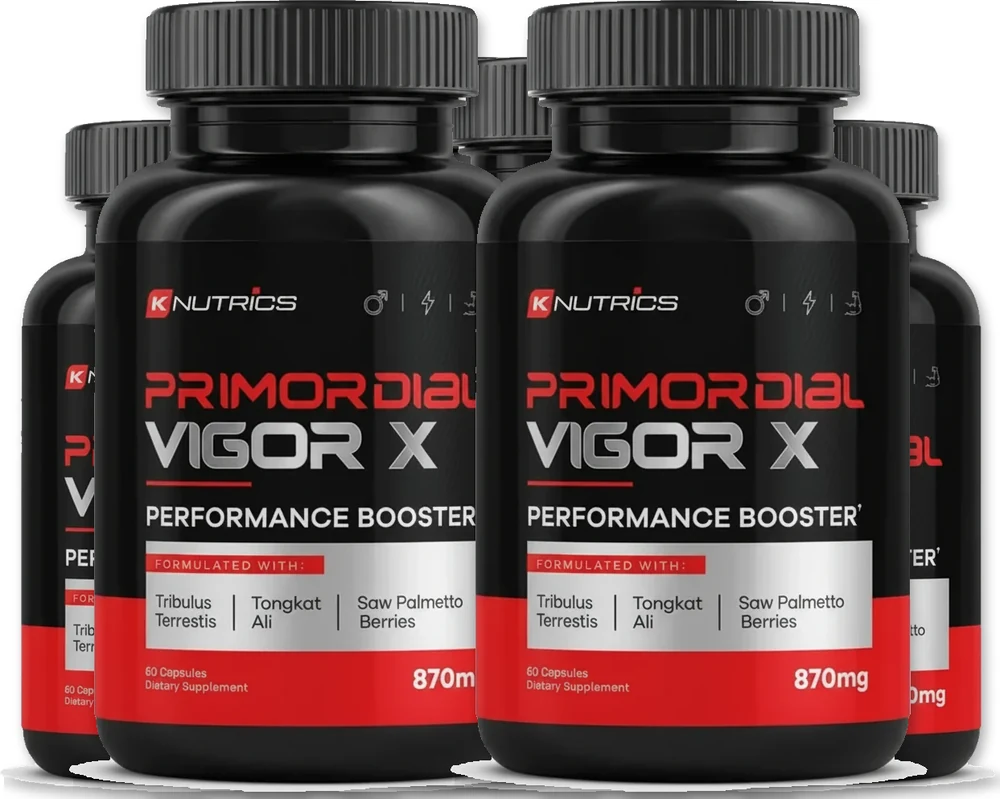
Applied honestly to this product. Primordial Vigor X publishes an 870 mg three-botanical blend total and names Tribulus terrestris, Tongkat Ali root and saw palmetto berry — but it does not publish a verified per-ingredient milligram breakdown or a standardisation figure. That means no one, including us, can map it onto any dose in the table above. Check the Supplement Facts panel for the per-ingredient line before you assume a trial-comparable dose of anything.
What the evidence does not show
This is the section most pages in this category skip, so here it is in plain terms.
- It does not show that raising a number changes how you feel. The clearest example is the ashwagandha crossover trial: salivary testosterone rose 14.7% more than placebo, and yet fatigue, vigour and sexual well-being showed no significant between-group difference. A hormone assay moving is not the same as a life changing.
- It does not show long-term safety or benefit. Almost every botanical trial cited here ran between 4 and 12 weeks in screened participants. Nobody has published what happens at year three.
- It does not show that the finished product works. Ingredients accumulate evidence; multi-ingredient formulas rarely get trialled as sold. Evidence for an ingredient is not evidence for a blend containing that ingredient at an undisclosed amount.
- It does not show equivalence between extracts. The Tongkat Ali trial literature leans heavily on specific standardised extracts. A label that says "Tongkat Ali 200 mg" without naming a standardisation is not automatically the same 200 mg that was studied.
- It does not show anything about treatment. None of these ingredients has been shown to treat hypogonadism or erectile dysfunction, and none should be used as an attempt to. Both are medical conditions with real causes worth diagnosing.
- We could not verify some widely repeated figures. A frequently quoted "2015 FDA study finding no quantifiable benefits" could not be traced to a primary document, so it does not appear above. Neither does the commonly cited "1–2% annual testosterone decline after 30", which we could not tie to a named cohort study. We would rather leave a gap than fill it with a number we cannot stand behind.
Prefer a formula that shows its working?
Primordial Vigor X is a once-daily, three-botanical capsule — Tribulus terrestris, Tongkat Ali root and saw palmetto berry — sold with an 8 to 12 week trial window and a 60-day money-back guarantee handled by the seller. No stimulants, no hormones.
Order Primordial Vigor X NowSo what should a man actually do with this?
Three conclusions follow from the table, and none of them is dramatic.
Fix the shortfalls first. If your vitamin D is low, that is a measurable, correctable thing with a real trial behind it. The same logic applies to sleep and body composition, which move testosterone more reliably than anything in a capsule.
Judge a product on its label, not its ingredient list. The audit numbers at the top of this page exist because the industry sells recognisable names rather than studied doses. If a panel does not tell you how much of each botanical you are getting, you cannot compare it to the trials in the matrix above — and neither can anybody else. Our companion piece on Tongkat Ali versus ashwagandha goes through the same exercise for the two most-stacked botanicals in men's supplements.
Give it a real window, then stop. The botanical trials that reported anything ran 4 to 12 weeks. Judging a capsule after ten days measures the adjustment period, not the intervention. Equally, if twelve honest weeks produce nothing, the evidence says that is your answer. Our pillar review of Tongkat Ali and Tribulus sets out what those ingredients can and cannot reasonably be expected to do.
Medical note: this article is general information, not medical advice, and it describes what trials measured rather than what any product does. Clinically low testosterone and erectile dysfunction are medical conditions that require diagnosis — a dietary supplement is not a treatment for either. Speak to a healthcare professional before starting any supplement, especially if you take medication or are managing a prostate, liver or hormonal condition. Adult men only.
Frequently asked questions
Do testosterone booster supplements actually work?
For most healthy men, no. An audit of 50 top-selling testosterone supplements published in the World Journal of Men's Health found that 90% claimed to raise testosterone, but only 24.8% of the 109 distinct components had any published data supporting that claim. Around 61.5% had no published data on testosterone at all, and 10.1% contained components with data suggesting a negative effect.
Which testosterone booster ingredient has the best evidence?
Tongkat Ali (Eurycoma longifolia) has the strongest case. A 2022 systematic review and meta-analysis in Medicina pooled five randomised controlled trials and reported a standardised mean difference of 1.352 (95% CI 0.565 to 2.138, p = 0.001) for total testosterone. The same authors reported very high heterogeneity between trials, and in subgroup analysis the effect was significant in hypogonadal men but not significant in healthy men.
Does Tribulus terrestris raise testosterone?
The controlled evidence says no. A 2025 systematic review in Nutrients covering 10 studies and 483 participants found that 8 of the 10 reported no significant change in androgen profile. The two that did showed modest rises of roughly 60 to 70 ng/dL, and only in men who were already hypogonadal. The authors concluded that no robust evidence was found for increasing testosterone levels.
Do vitamin D and zinc boost testosterone?
Only when you are short of them. The trial evidence for both is repletion evidence, not boosting evidence. In a one-year trial, men taking 3,332 IU of vitamin D a day saw total testosterone rise from 10.7 to 13.4 nmol/L while the placebo group did not change, but those men were overweight and enrolled in a weight-reduction programme. The zinc data comes from very small experimental studies in men who were deliberately restricted or already marginally deficient. Neither tells you what happens if your levels are already normal.
Can a testosterone booster treat low testosterone?
No. Clinically low testosterone is a medical diagnosis and a dietary supplement is not a treatment for it. Persistent fatigue, low mood, low libido or other ongoing symptoms should be assessed by a clinician, because they can have causes that a capsule will not address.
Scientific references
- Clemesha C.G., Thaker H., Samplaski M.K. — "Testosterone Boosting" Supplements Composition and Claims Are not Supported by the Academic Literature. World J Mens Health 2020;38(1):115–122 (PMID 31385468)
- Leisegang K., Finelli R., Sikka S.C., Panner Selvam M.K. — Eurycoma longifolia (Jack) Improves Serum Total Testosterone in Men: A Systematic Review and Meta-Analysis of Clinical Trials. Medicina 2022;58(8):1047 (PMC9415500)
- Talbott S.M., Talbott J.A., George A., Pugh M. — Effect of Tongkat Ali on stress hormones and psychological mood state in moderately stressed subjects. J Int Soc Sports Nutr 2013;10:28 (PMID 23705671)
- Vilar Neto J.O. et al. — Effects of Tribulus (Tribulus terrestris L.) Supplementation on Erectile Dysfunction and Testosterone Levels in Men: A Systematic Review of Clinical Trials. Nutrients 2025;17(7):1275 (PMID 40219032)
- Barry M.J. et al. — Effect of increasing doses of saw palmetto extract on lower urinary tract symptoms: a randomized trial (CAMUS). JAMA 2011;306(12):1344–1351 (PMID 21954478)
- Andriole G.L. et al. — The effect of increasing doses of saw palmetto fruit extract on serum prostate specific antigen: analysis of the CAMUS randomized trial. J Urol 2013;189(2):486–492 (PMID 23253958)
- Lopresti A.L., Drummond P.D., Smith S.J. — A Randomized, Double-Blind, Placebo-Controlled, Crossover Study Examining the Hormonal and Vitality Effects of Ashwagandha in Aging, Overweight Males. Am J Mens Health 2019;13(2) (PMID 30854916)
- Melville G.W., Siegler J.C., Marshall P.W.M. — Three and six grams supplementation of d-aspartic acid in resistance trained men. J Int Soc Sports Nutr 2015;12:15 (PMID 25844073)
- Mansoori A. et al. — Effect of fenugreek extract supplement on testosterone levels in male: A meta-analysis of clinical trials. Phytother Res 2020;34(7):1550–1555 (PMID 32048383)
- Pilz S. et al. — Effect of vitamin D supplementation on testosterone levels in men. Horm Metab Res 2011;43(3):223–225 (PMID 21154195)
- Prasad A.S. et al. — Zinc status and serum testosterone levels of healthy adults. Nutrition 1996;12(5):344–348 (PMID 8875519)
- NIH LiverTox — Tongkat Ali. NCBI Bookshelf NBK609015
Three named botanicals, graded honestly
If you have read the matrix and want the formula this site covers, the official store handles pricing, shipping and the 60-day money-back guarantee.
Order From Official Store